Traceability, Immunogenicity, and Batch Variability: Mastering Pharmacovigilance in the Biosimilars Era
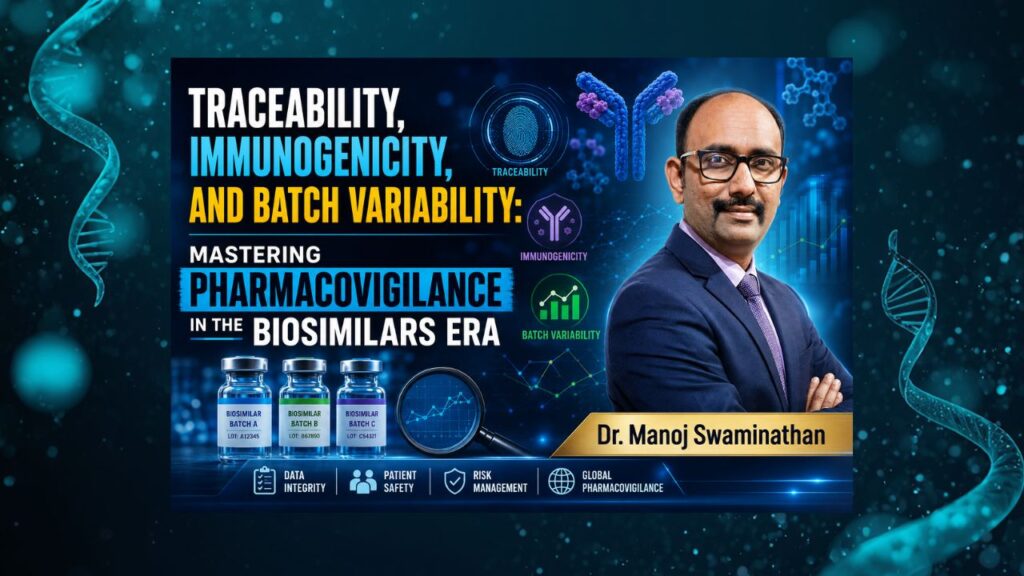
The biosimilars market has expanded rapidly over the past decade, and for good reason. These medicines have brought meaningful cost savings and widened patient access to biologics for conditions like rheumatoid arthritis, Crohn’s disease, and several cancers. The global biosimilars market is projected to exceed $60 billion by 2030, driven largely by patent expirations of […]

Medical information (MI) departments occupy an unusual space in the pharmaceutical ecosystem. They sit at the boundary between clinical communication and regulatory compliance, fielding product queries from healthcare professionals and patients while simultaneously feeding into pharmacovigilance and product quality complaint workflows. That dual role makes the MI function a genuinely high-value audit target, and one […]

Introduction For decades, Pharmacovigilance operated reactively. Teams waited for adverse events to emerge before acting. Today, complex biologics and accelerated regulatory pathways make waiting unacceptable for patient safety. Health Hazard Analysis adapts systematic methods from engineering and food safety. It transforms how we anticipate, evaluate, and mitigate drug risks before harm occurs. Integrating hazard analysis […]

Pharmaceutical pollution is no longer a niche environmental concern. It is becoming a serious regulatory, scientific, and professional issue, and pharmacovigilance professionals are increasingly well placed to help lead the response. For years, traces of medicines have been detected in rivers, lakes, wastewater, and even drinking water. What has changed is not the existence of […]

Most compliance teams treat audit preparation like a fire drill. Inspectors announce, panic sets in, everyone scrambles to locate documents that should have been organized months ago, and leadership spends two weeks pretending the gaps were never there. There is a better way to run this. I spent time mapping Stephen Covey’s 7 Habits of […]

The short answer, for most organisations, is: not really. Not yet. AI is already inside pharmacovigilance and medical information workflows. Case intake tools, literature screening software, enquiry response drafting, signal detection platforms. It didn’t arrive with fanfare. It arrived quietly, embedded in systems people use every day. And in many cases, the professionals using those […]

In drug safety, the question for pharmaceutical companies isn’t whether to outsource anymore—it’s how to do it right. Pharmacovigilance outsourcing has moved well beyond simple case processing into something closer to a strategic partnership that handles everything end-to-end. Drawing on insights from industry experience, this guide covers the shift to full-service models, the compliance pitfalls […]

Pharmacovigilance tracks drug safety data to ensure medications help patients more than they hurt them. Any organization handling this work needs a solid Quality Management System to meet their regulatory obligations and actually do the job right. What a Pharmacovigilance QMS Really Is The QMS sits within your broader pharmacovigilance setup. It maps out who […]

Testing new treatments on patients with life threatening diseases requires immediate understanding of whether the treatment helps or harms. Data Safety Monitoring Boards (DSMB) provide this critical oversight. Proper auditing of these boards ensures trial integrity and patient safety. The Stakes The Challenge A DSMB requires clear rules documented in a DSMB Charter. This defines […]

In the world of Pharmacovigilance, the Drug Safety Mailbox is far more than an email address. It is the nerve center of patient safety—the first point of contact where patients, healthcare professionals, and partners report adverse events, product quality issues, and medical inquiries. Yet for many organizations, this critical mailbox has become a bottleneck. With […]